Mental Mapping
A Diachronic Portrait of Hangzhou
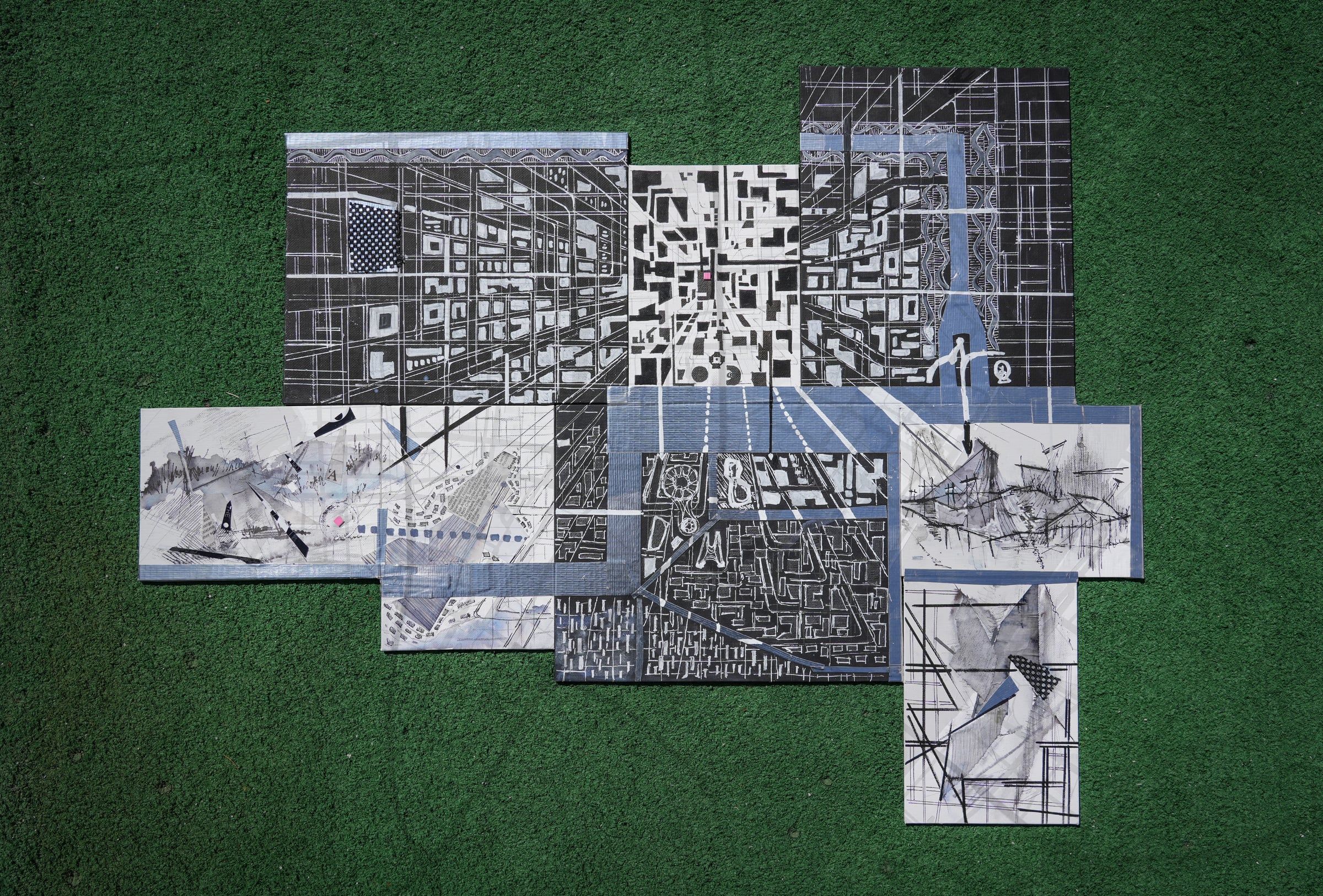
This mental map layers my lived experience along Hangzhou’s Qiantang River. White space represents the organic past — tidal flats, farmland — while black signifies the rationally planned new city. The red square marks my home, caught between eras.
Moving beyond Lynch’s static five elements, I introduce time as a sixth element: a diachronic force visible in urban transformation. The axonometric perspective allows past and present to coexist spatially, echoing how memory accumulates. Here, the sky is fragmented by rising towers; the river, once an open edge, now anchors a CBD.
This is not a map of place, but of becoming — a personal cartography where sensation, memory and planning intersect. It suggests that true urban understanding requires mapping not only form, but also the rhythm of loss and growth that defines home.