The Physiognomies
In the Space Between Living and Sightseeing
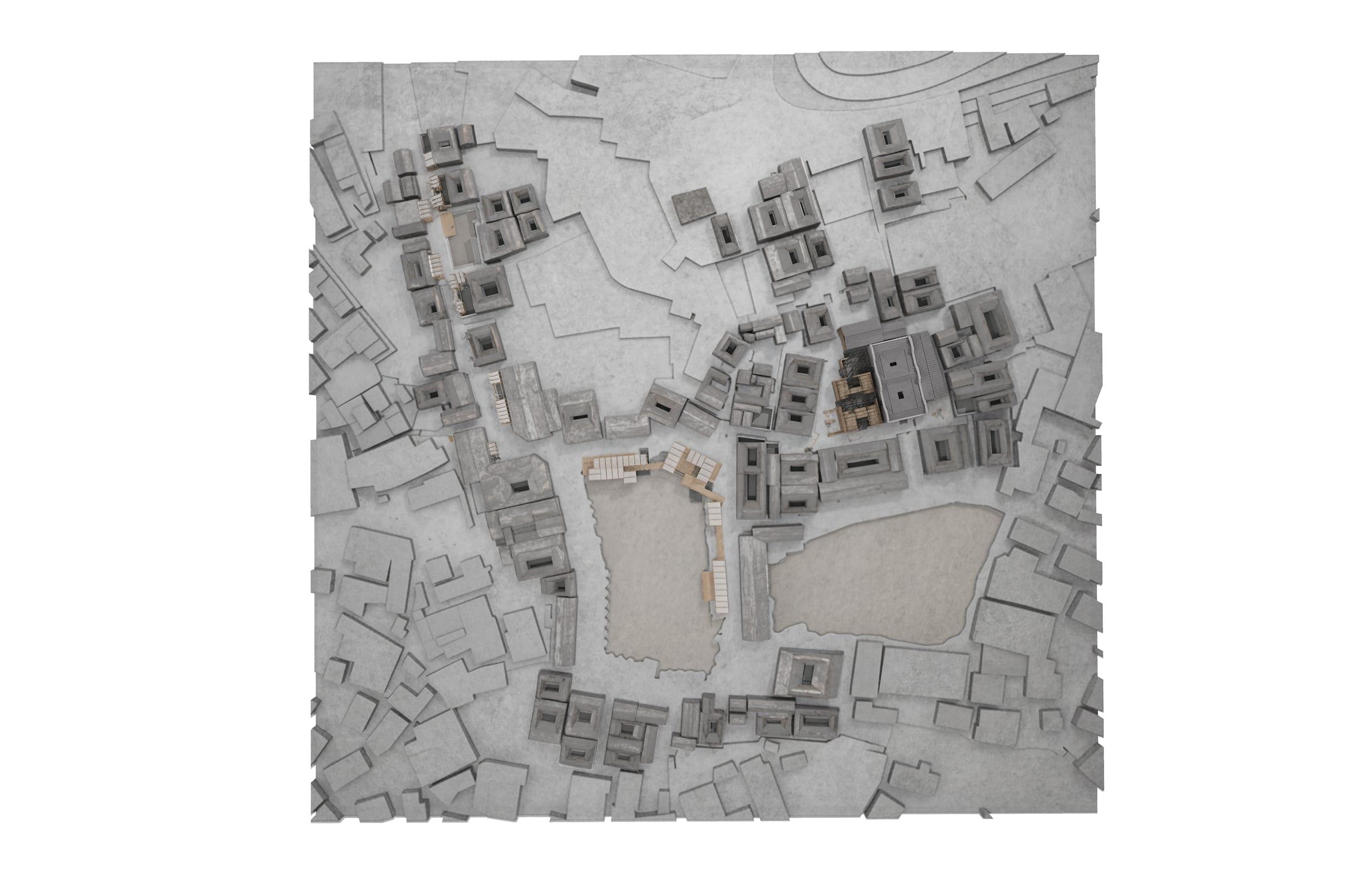
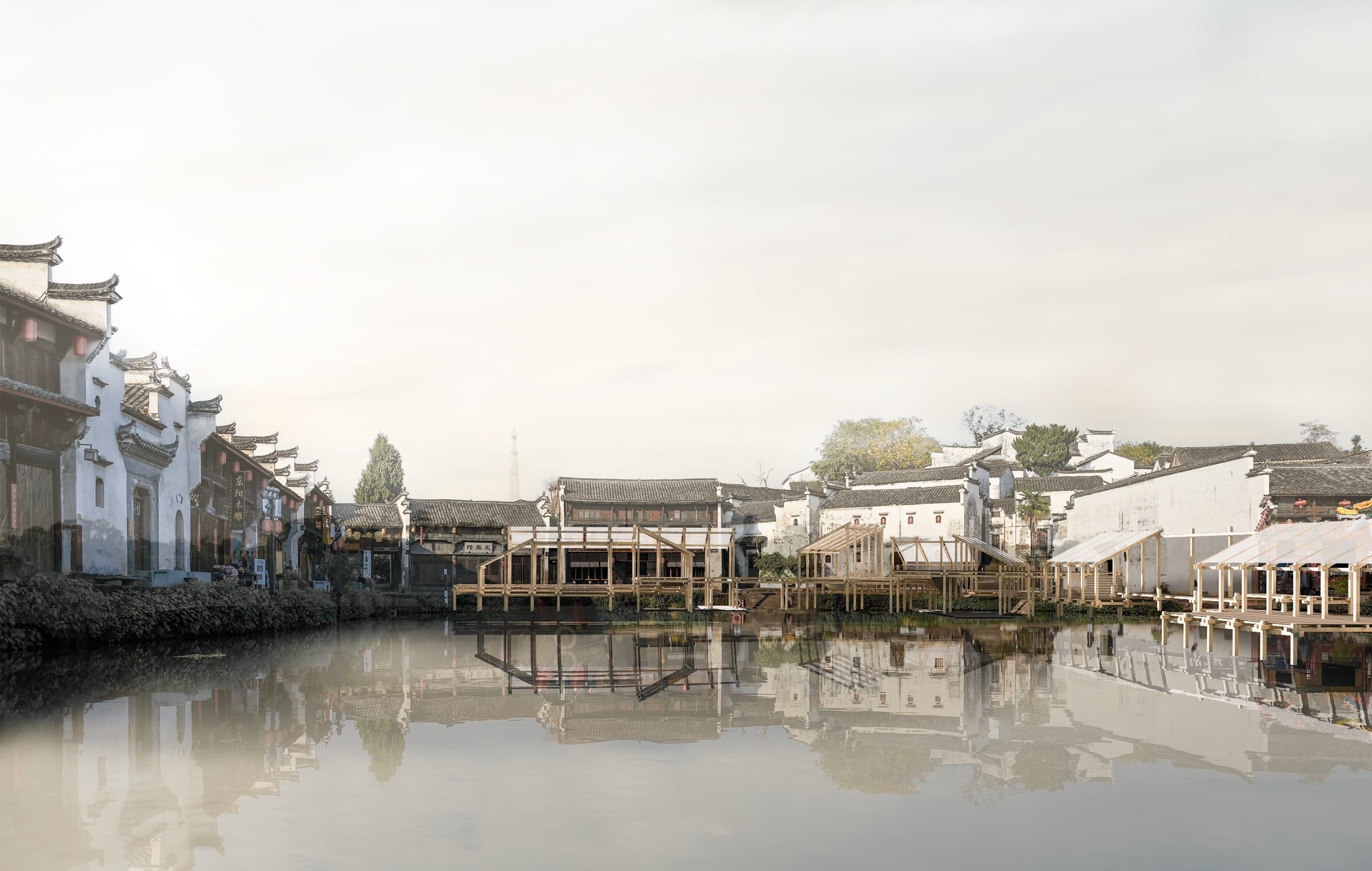
Zhuge Village is a renowned ancient Chinese village cluster. The original rural lifestyle has undergone dramatic transformation under the impact of tourism. Due to a lack of guided spatial organization, the behaviors of villagers and visitors have led to disorder within the village. This has not only disrupted the villagers’ once tranquil lives but also significantly weakened the vitality of the tourism economy.
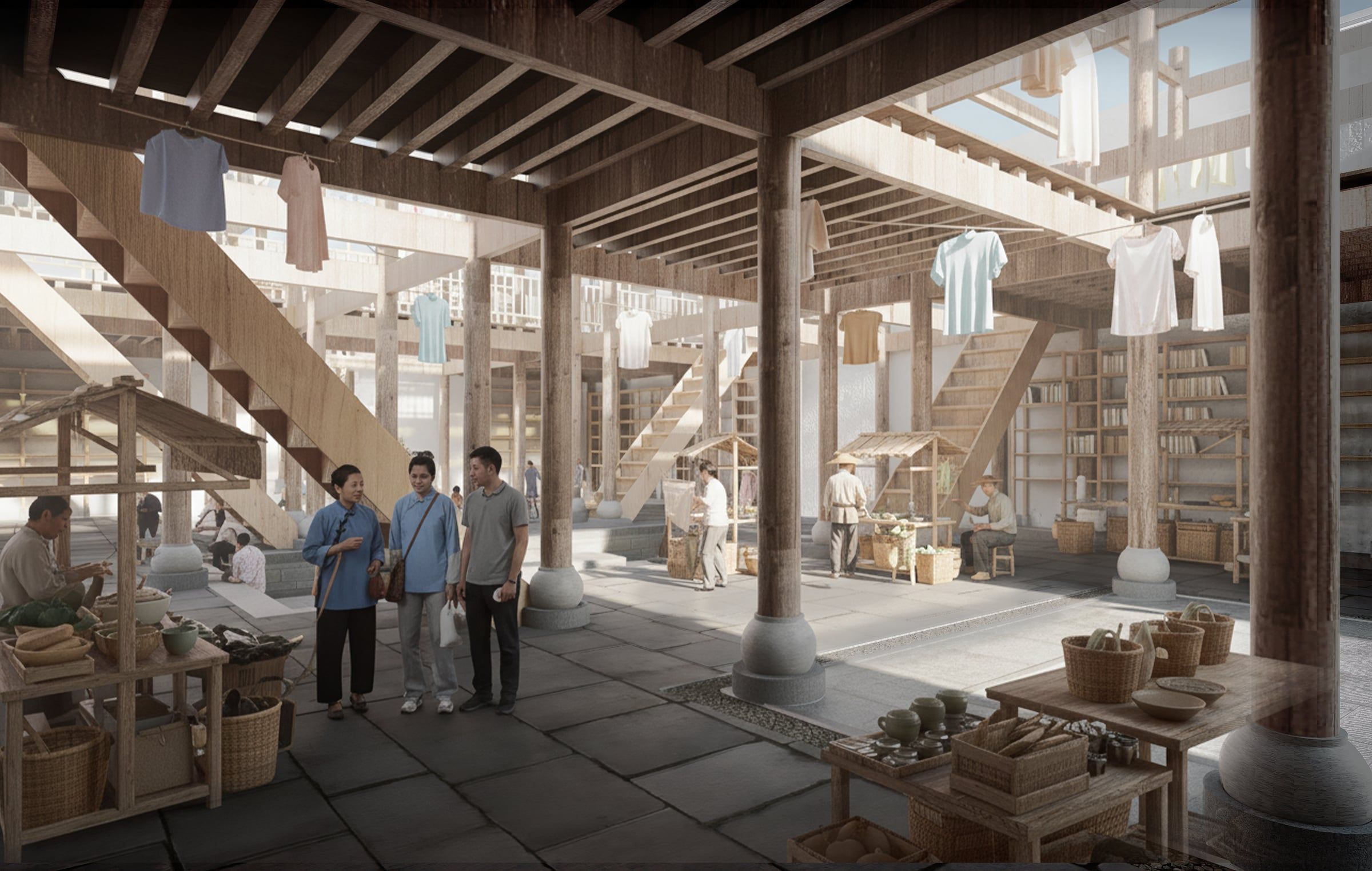
This project applies a physiognomic approach — diagnosing and activating the village’s spatial structure. We focus on three core types: street and alley, public open space, and yard interspace. By strategically inserting “activators” into each, we aim to catalyze spontaneous shared behaviors, enabling an organic coexistence between the two groups and revitalizing the village as a whole.
01Street and alley
From divided separation to close communication
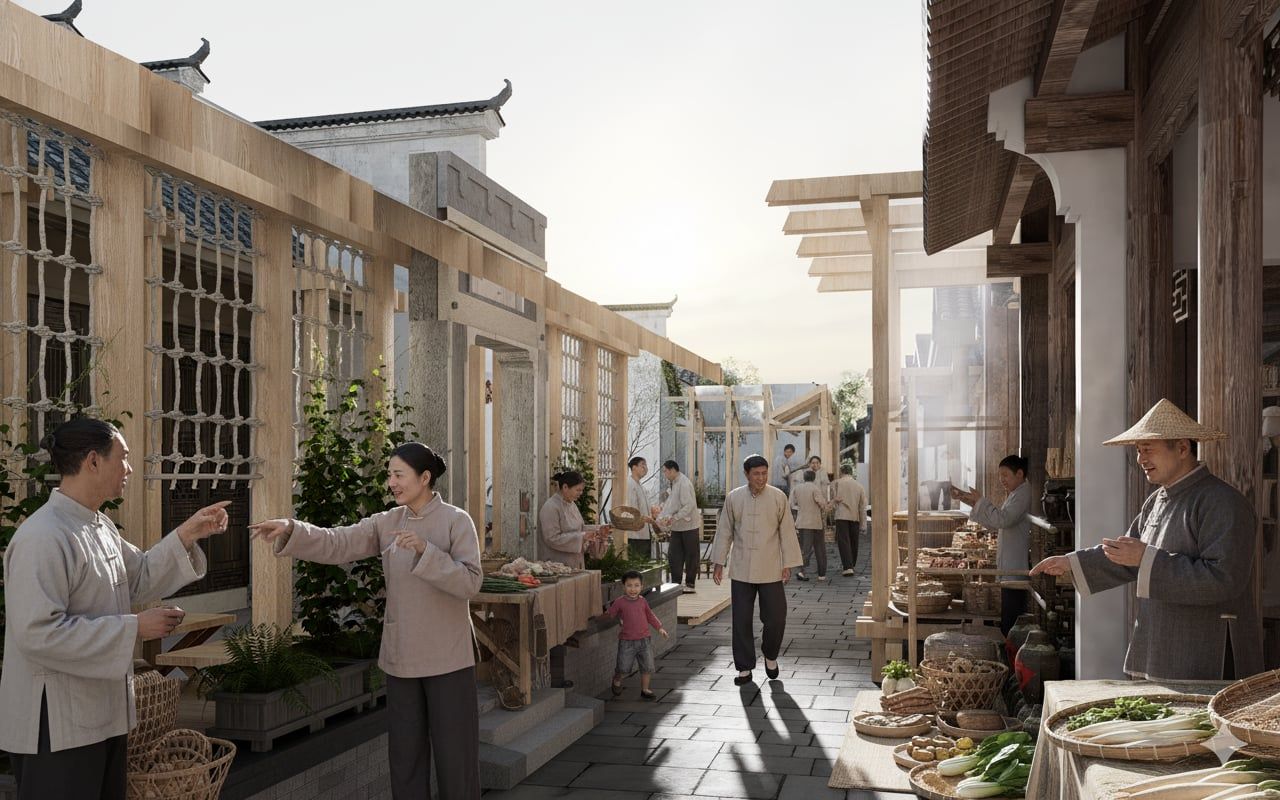
Zhuge Village’s straight entrance street discourages stays, limiting merchant–tourist interaction. We added point-like “activators” to spark spontaneous activities, transforming it into a social space.
02Pond and yard
Public open space, from chaotic entanglement to orderly coexistence; yard interspace, from mutual encroachment to organic integration